

Subsistence Crops Explained: 10 Real-World Examples Every Farmer Should Know
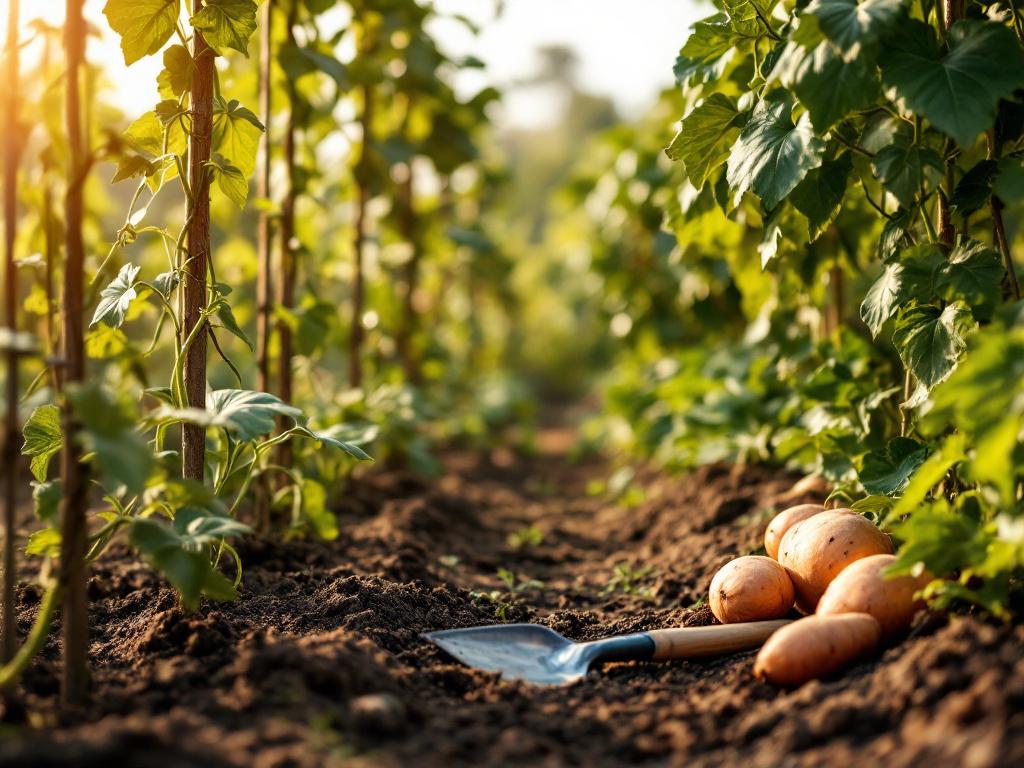
You're growing food your family eats. The question isn't whether subsistence farming is "enough" — it's whether you're operating the model deliberately or by default. The subsistence crops examples below aren't curiosities from an anthropology textbook. They're the staples that have anchored household food security for generations: crops that yield calories per square foot, store for months without specialized infrastructure, and recover from neglect that would wipe out a market garden.
This is a practitioner reference. What follows catalogs the crops that feed families, what they yield, how long they store, and where the line sits between feeding a household and selling surplus. Subsistence farming, defined operationally, means crops grown primarily to feed the household — with surplus, if any, being secondary. That definition matters because the design choices follow from it.
Table of Contents
- Why Households Still Grow Their Own Food
- 10 Subsistence Crops Examples Every Household Plot Should Consider
- Subsistence vs. Cash Crops — Where the Line Actually Blurs
- Matching Crops to Climate
- Nutrition and Storage
- What a Subsistence Plot Actually Yields
- The Five Mistakes That Cost Subsistence Plots Their Yield
- The Scaling Decision — A Pre-Flight Checklist
Why Households Still Grow Their Own Food — The Operating Logic of Subsistence Farming
The subsistence crops examples that survive in real household plots — beans, potatoes, squash, corn — aren't there because farmers lack ambition. They're there because the subsistence model solves problems that commercial farming doesn't. Predictable household calories. Insulation from market price swings. Labor that scales to family size rather than capital. Once you frame subsistence farming as a strategy rather than a lack of one, the crop selection logic becomes obvious.
Food security over cash flow. When markets fail — transport disruption, currency instability, supply chain breaks — a household with stored beans and root crops eats. A household with cash and no crops doesn't. The subsistence plot is, in effect, a hedge denominated in calories rather than currency. That hedge has no expiration date as long as the storage holds.
Labor economics. Subsistence plots match available family labor. There's no payroll, no hired-hand coordination, no machinery debt servicing whether the harvest comes in or not. The "wage" is the food itself, paid in the form of stored beans, root crops, and squash. This is why the model persists in places where wage labor is unreliable or absent — the marginal hour spent in the plot returns calories directly, with no intermediary that can fail.
Risk diversification through polyculture. Carol Deppe, the homesteader and seed breeder behind much of the modern staple-crop literature, frames subsistence selection around resilience rather than maximum yield. According to Mother Earth News, Deppe's approach centers on a small set of staples — beans, potatoes, squash, corn — chosen because no single weather event, pest, or disease takes out the whole plot. A bean failure leaves the potatoes. A potato blight leaves the squash. Monocultures don't offer that.
Caloric efficiency per square foot. The Prepared documents that potatoes and sweet potatoes deliver more calories per square foot than nearly any other home-grown crop. Dry beans add the protein component, and amaranth fills the grain niche where wheat or rice don't grow well. The math is unambiguous: a small plot planted in the right staples can cover the bulk of a household's caloric needs in a way that a small plot of mixed market vegetables never will.
The reframe matters. Subsistence isn't a starting line you graduate from. It's a strategy with measurable advantages — storage simplicity, market independence, labor flexibility — that you may or may not want to keep. Scaling up means giving up some of those advantages in exchange for cash income. That's a real trade-off, not a clear upgrade.
The crops that follow are the candidate pool. The right four or five for a given household depend on climate, soil, and dietary preference. None of them are decorative. Each one earns its row by delivering calories, protein, or storage life that the others can't match.
10 Subsistence Crops Examples Every Household Plot Should Consider
The selection criteria for subsistence crops examples are narrower than for a market garden: caloric density, storage life, low input requirement, and household-scale yield. A crop that grows beautifully but molds in storage doesn't qualify. A crop that yields heavily but requires daily handling doesn't either. The ten below have each earned a place in household plots across multiple climates and centuries.
1. Dry beans (common bean, Phaseolus vulgaris). Yields roughly 3–5 lbs per 100 sq ft, with each pound delivering over 1,500 calories, according to Mother Earth News. Stored dry in sealed containers, they keep for years without refrigeration, freezing, or canning. Dry beans are the protein anchor of nearly every subsistence plot — and as legumes, they fix nitrogen back into the soil, reducing fertility loss for the next crop. No other staple matches that combination of calorie density, protein content, and storage simplicity.
2. Potatoes. Harvest in 65–90 days from planting, per Mother Earth News, and deliver high calories per square foot, per The Prepared. Stored in cool, dark, ventilated conditions, they hold for months without processing. The fastest-cycling staple in this list, potatoes are the crop that recovers a household's calorie supply quickest after a planting failure or a late start. Plant them early, plant them deep, and don't water them too late or the tubers split.
3. Sweet potatoes. A 100–150 day growing window, per The Prepared. Both the tubers and the leaves are edible — the leaves provide a continuous green harvest during the growing season, which most root crops can't offer. Sweet potatoes tolerate poor soil better than white potatoes and resist most pests and diseases that hit the Solanum family. The trade-off: they require curing (warm, humid storage for about a week after harvest) before they go into long-term storage.
4. Maize (corn). Cited as a foundational staple alongside beans and squash in Mother Earth News's staple-crop framework. Dent and flint varieties dry on the stalk, store for years as whole kernels, and grind into flour or meal as needed. The nutritional pairing matters: corn is low in lysine, beans are high in it. Eaten together, they form a complete protein. This is not coincidence — it's why so many traditional household diets pair them.
5. Winter squash and pumpkins. Long storage life — months in a cool, dry space without refrigeration. The third member of the Three Sisters planting alongside corn and beans, documented by Mother Earth News. High in carbohydrates and vitamin A. Squash carries a household through winter when greens are scarce and stored beans grow monotonous. Hubbard, butternut, and kabocha varieties hold longest; acorn squash declines after about two months.
6. Amaranth. Grown for both grain and edible leaves, per The Prepared. Drought-tolerant. Fills the grain niche in climates where wheat or rice don't establish well. The leaves harvest like spinach during the growing season; the seed heads dry and thresh out into a small grain that stores for years. Amaranth is one of the few subsistence crops that gives you both a green and a grain from the same plant.
7. Jerusalem artichokes (sunchokes). A perennial — once planted, they return annually with minimal input, per Mother Earth News. Tubers can stay in the ground over winter in many climates, which means the storage problem is solved by the soil itself. Frost-hardy, pest-resistant, and almost impossible to eradicate once established. The catch: they spread aggressively. Plant them in a corner you don't mind dedicating to them permanently.
8. Cassava (manioc). Listed in the USDA's alternative crops reference as a small-farm staple. A tropical and subtropical root crop known for storing on the root itself — tubers can remain in the ground until needed, eliminating the curing and cellar requirements that other root staples demand. In climates that support it, cassava is one of the most labor-efficient subsistence crops because it tolerates extended neglect between planting and harvest.
9. Millet and sorghum. Both appear on the USDA alternative crops list as drought-resilient cereal grains. They produce on land too dry or too poor to support corn or wheat reliably. Stored as dry grain, they keep for years. In subsistence contexts, millet and sorghum are the insurance grains — the ones that yield something when the rains fail and corn doesn't.
10. Hardy greens (kale, collards, chard). Continuous-harvest crops that bridge the gap between stored staples and fresh nutrition. Cold-tolerant varieties extend the growing season into late fall and resume in early spring. A subsistence plot without a hardy greens bed depends on stored food alone for too many months — and stored food, however calorie-rich, is light on the vitamins and minerals that fresh greens deliver.
The right four or five crops for a given household depend on climate, soil, and dietary preference. This list is the candidate pool, not a prescription. A cold-climate household leans on potatoes, beans, squash, corn, and kale. A hot-climate household substitutes sweet potatoes for white potatoes, amaranth or sorghum for the grain, and collards for kale. The framework is the same; the species rotate to match conditions.
The crops that define subsistence farming aren't there because they're trendy. They're there because they survive neglect, store for months, and deliver calories when markets fail.
Subsistence vs. Cash Crops — Where the Line Actually Blurs
Most subsistence farmers aren't 100% subsistence. Surplus happens. The real question is whether the surplus crops can become cash without compromising the household food supply — and the answer depends almost entirely on storage life and caloric density, not market prices.
| Crop | Storage Life | Re-grows / Multi-Harvest | Calorie Density Note |
|---|---|---|---|
| Dry beans | Years (dry) | Single harvest | ~1,500 cal/lb |
| Potatoes | Months (cool/dark) | Single harvest, 65–90 days | High cal/sq ft |
| Sweet potatoes | Months (cured) | Single harvest, 100–150 days | High; leaves also edible |
| Winter squash | Months (cool/dry) | Single harvest | Carbs + vitamin A |
| Jerusalem artichokes | In-ground over winter | Perennial / re-grows | Carb staple |
| Maize (dry) | Years (dry) | Single harvest | Pairs with beans for complete protein |
| Amaranth | Years (dry grain) | Grain + leaves | Grain substitute |
| Hardy greens | Days (fresh) | Continuous harvest | Fresh nutrition only |
The pattern in the table is the answer. Crops with long storage life and high caloric density — beans, dry corn, potatoes, squash — are the surplus-to-cash candidates because they can be held until a buyer is found. A bag of dry beans sells in November as readily as in August. Fresh greens cannot be held that way. They must be eaten, preserved, or sold within days, which means selling them is a logistical problem, not a marketing problem.
Sweet potatoes and squash sit in the middle. They store for months, but they degrade in transport — bruising, soft spots, and curing failures eliminate margin quickly. Local sales work. Shipping doesn't.
The realistic transition isn't "switch from subsistence to cash crops." It's "grow more of what already stores well, and sell the overflow." The household keeps eating the same crops it always ate. The plot expands modestly. Surplus moves through the same channels the household already uses for trade. This is the version of scaling that doesn't compromise food security — and it's the version that actually works for most households that try it.
The hidden requirement is measurement. You can't know whether you have surplus, year over year, unless you're tracking what came out of each row. Operations that adopt consistent yield data — even at household scale — are the ones that can confidently project surplus, decide how much to sell, and avoid the mistake of selling next season's seed stock by accident. Without records, "surplus" is a guess. With records, it's a plan.
Matching Crops to Climate — What Actually Grows on Your Land
The selection of subsistence crops depends less on what you want to grow than on what your land will actually support. A 150-day variety in a 110-day growing window is a wasted bed. The match between crop and condition is the single biggest determinant of whether the plot succeeds.
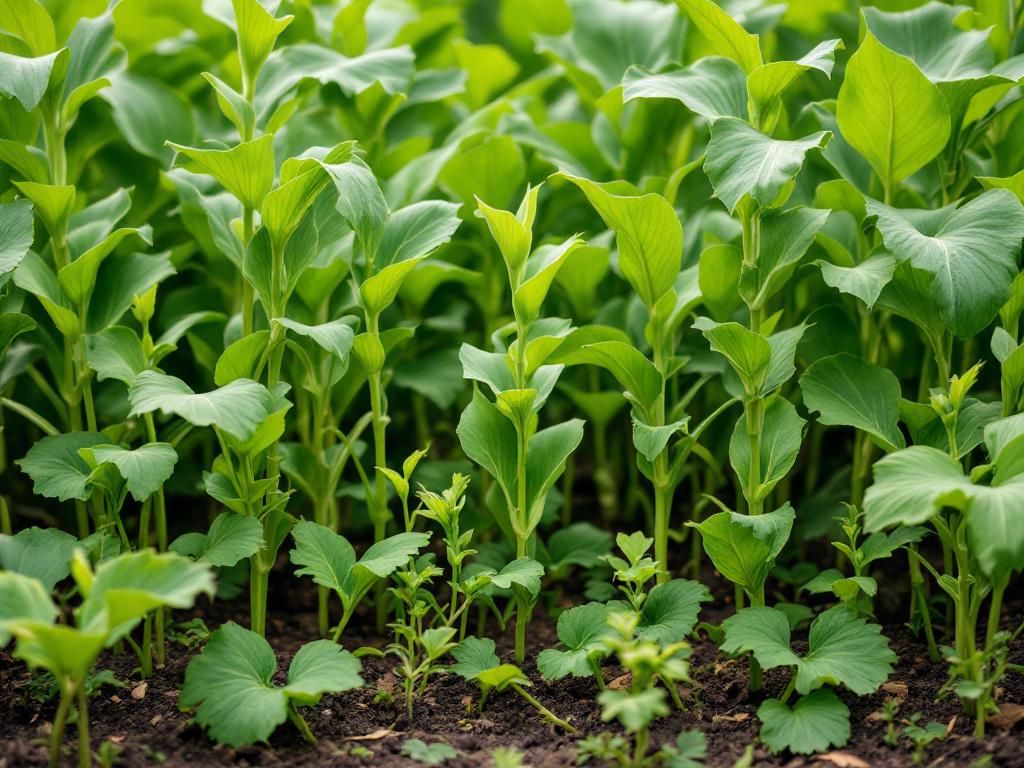
Cold, short-season climates. Potatoes finish in 65–90 days and tolerate cool soil at planting, per Mother Earth News. Hardy greens (kale, collards, chard) thrive through frost and resume in spring. Dry beans with shorter-maturity varieties — bush types around 75–90 days — finish before the first hard freeze. Jerusalem artichokes are perennial and frost-hardy, returning each year without replanting.
Hot, long-season climates. Sweet potatoes need the full 100–150 day window and warm soil throughout, per The Prepared. Maize, winter squash, and amaranth all thrive in heat and full sun. Amaranth, in particular, performs in conditions that stress corn — it's a hot-climate grain alternative that doesn't bolt or scorch.
Drought-prone conditions. Amaranth tolerates drought better than most grains, per The Prepared. Sorghum and millet are listed as drought-resilient cereals in the USDA alternative crops reference. Sweet potatoes tolerate poor and dry soil better than white potatoes. None of these crops produce maximum yield under drought — but they produce something, which is what subsistence requires.
Poor or marginal soils. Sweet potatoes, Jerusalem artichokes, amaranth, and beans all establish in soils that wouldn't support a market garden. Beans add a second benefit: as legumes, they fix nitrogen and improve the soil for the next crop. A poor-soil plot planted in beans for a season is a better plot the season after.
Mixed-condition plots — the realistic case for most households. The Three Sisters approach — corn, beans, and squash grown together — works across a wide range of conditions and is documented as a foundational subsistence pattern in Mother Earth News's staple-crop coverage. The corn provides structure for the beans to climb. The beans fix nitrogen for the corn and squash. The squash leaves shade the soil, reducing weed pressure and water loss. It's a polyculture that improves the conditions it grows in.
A crop that requires irrigation you don't have is a crop you shouldn't plant. A crop that needs more frost-free days than your zone delivers won't finish. The match between crop and climate is not negotiable, and pretending otherwise is how subsistence plots fail in their first season.
Nutrition and Storage — Why These Crops Sustain Households for Months
The question buried inside any conversation about subsistence crops is whether a household can actually live on them. The answer is yes, but only when three conditions are met: caloric and protein adequacy, storage that bridges the harvest gap, and a fresh-food layer that prevents nutritional collapse during the lean months.
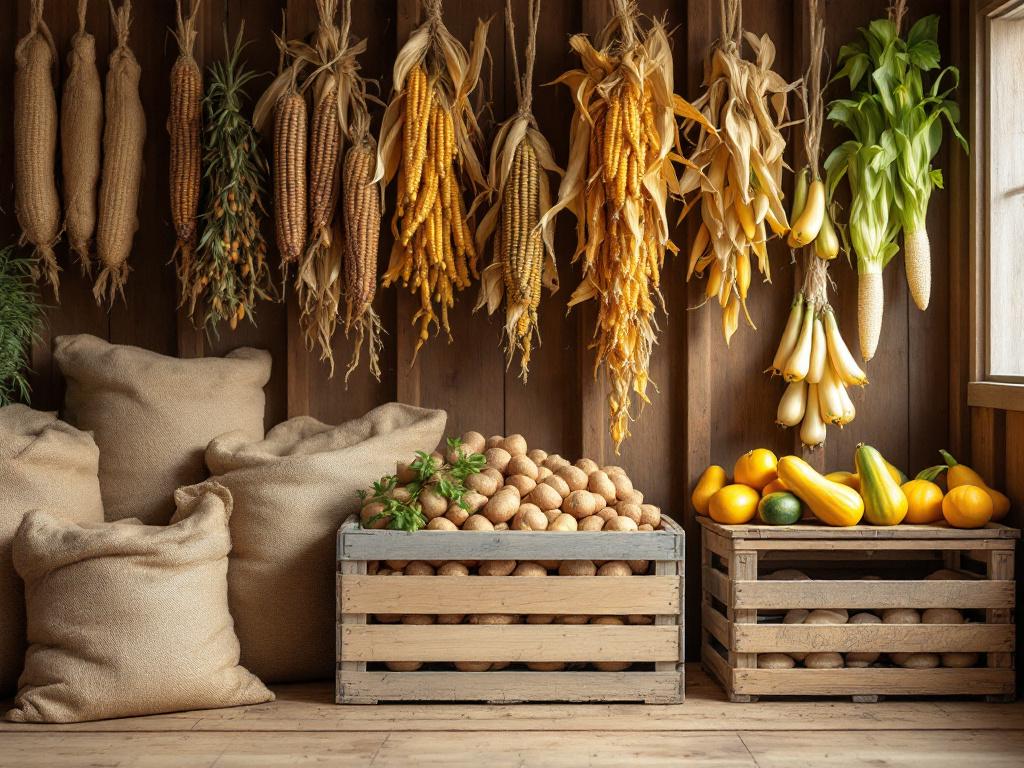
Caloric and protein adequacy. The bean-and-grain pairing — beans with corn, beans with amaranth, beans with rice — delivers complete protein because the amino acid profiles complement each other. Corn is low in lysine; beans are high in it. Together, they cover the essential amino acids that neither covers alone. This isn't a modern nutritional discovery. It's why nearly every traditional subsistence cuisine pairs a legume with a grain. Dry beans deliver over 1,500 calories per pound, per Mother Earth News, which makes them dense enough to anchor a daily diet without requiring large servings. Potatoes and sweet potatoes anchor the carbohydrate side with high calories per square foot, per The Prepared, filling the calorie gap that beans alone can't. Hardy greens — kale, collards, sweet potato leaves — fill the micronutrient gap with vitamin A, vitamin C, iron, and calcium. The combination of legume, grain, root, and green covers the macronutrient and most micronutrient requirements without supplementation.
Storage as the second harvest. Storage is the difference between feeding a family year-round and feeding them only during harvest months. The harvest is half the work; preservation is the other half. The storage profile of each crop dictates the infrastructure required.
Dry storage — beans, dry corn, amaranth grain — needs only a sealed, dry, rodent-protected container. Years of shelf life with no further input. This is the easiest storage type to manage and the reason these crops anchor subsistence systems globally.
Cool, dark cellar storage handles potatoes and winter squash for months, per Mother Earth News. The requirements are stable temperature (around 40–55°F for most root crops), low humidity, and ventilation. A basement, root cellar, or insulated shed handles the job without electricity.
In-ground over-winter storage works for Jerusalem artichokes in many climates, per Mother Earth News. The soil itself is the storage container. Dig as needed.
Curing storage applies to sweet potatoes — about a week of warm, humid conditions before they go into cool storage. Skip the curing step and they rot within weeks instead of holding for months.
The practical point: crops with long natural storage life require less preservation infrastructure. No canning equipment. No freezer dependence. No electricity for the storage to function. This is what makes the model work in places where infrastructure is unreliable — and what makes it resilient even where infrastructure is reliable.
The fresh-food bridge. Storage staples cover calories and protein, but household nutrition collapses without fresh food during the lean months. Continuous-harvest greens, sweet potato leaves, and early-season crops like radishes and lettuce bridge from stored food back to fresh harvest. The bridge crops aren't optional. A subsistence plot without a green crop is a plot that depends on stored food alone for too many months of the year, and the result — over a season or two — is fatigue, slow recovery from illness, and a family that's eating enough calories but isn't actually well-fed. The greens bed is small. Its impact on household health, across the lean months, is disproportionately large.
Subsistence doesn't mean malnutrition. A plot of beans, potatoes, squash, and greens delivers more complete nutrition per acre than any monoculture grown for cash.
What a Subsistence Plot Actually Yields — Realistic Numbers per Crop
Yield expectations matter more than crop selection. A bean variety that yields 5 lbs per 100 sq ft on paper but produces 2 lbs in your conditions is a planning failure waiting to happen. The reference table below sticks to documented figures from the available research.
| Crop | Documented Yield / Cycle | Storage After Harvest | Source |
|---|---|---|---|
| Dry beans | 3–5 lbs per 100 sq ft; ~1,500 cal/lb | Years (dry) | Mother Earth News |
| Potatoes | 65–90 day cycle; high cal/sq ft | Months (cool/dark) | Mother Earth News / The Prepared |
| Sweet potatoes | 100–150 day cycle | Months (cured) | The Prepared |
| Winter squash | One harvest per season | Months (cool/dry) | Mother Earth News |
| Jerusalem artichokes | Perennial regrowth | In-ground overwinter | Mother Earth News |
| Maize (dry) | One harvest per season | Years (dry) | Mother Earth News |
| Amaranth | Grain + leaves continuous | Years (dry grain) | The Prepared |
The gap between potential yield and actual yield is usually water, soil fertility, and pest pressure — not seed quality. A bean variety capable of 5 lbs per 100 sq ft will produce that yield only when the soil has enough nitrogen, the rainfall is adequate, and pest pressure stays moderate. In a dry season with marginal soil, the same seed in the same plot might produce half. Seed selection matters less than most homesteading content suggests; conditions matter more.
Subsistence plots tend to underperform their potential because farmers hedge against failure by spreading effort thin across many crops rather than optimizing two or three. This is rational risk management — and also the reason that average yields in mixed plots run lower than the headline numbers in seed catalogs. The trade-off is intentional. Lower yield, lower variance, less catastrophic failure risk.
The practical math for a household of four to five: you need enough storage staples to cover roughly 8–10 months of calories from harvest to next harvest, with fresh greens covering the gap. Working backwards from that target gives you a planting plan. Estimate the calories needed per person per day, multiply by household size and storage months, and convert to pounds of beans, potatoes, corn, and squash. The numbers will surprise most first-time planners — the plot needs to be larger than instinct suggests.
Measuring yield year over year is the single highest-leverage habit a subsistence farmer can adopt. Without records, you can't tell whether last year's bean failure was weather, pests, or seed. A simple log — date planted, variety, weather notes, pounds harvested — turns three seasons into a decision tool. Modern field-level tracking, even at household scale, lets a small operator see patterns that used to require an extension agent or a full agronomic record. The barrier to good record-keeping has dropped to almost nothing. The barrier to acting on what the records say is still the discipline of writing them down.
The Five Mistakes That Cost Subsistence Plots Their Yield
The failures that hit subsistence crops aren't usually exotic. Five recurring mistakes account for most of the yield loss in household plots, and each one has a direct fix.
Planting a monoculture instead of a polyculture. Monocultures are vulnerable to single-pest collapse and drain soil of specific nutrients. The Three Sisters pattern — corn, beans, squash grown together — and similar polycultures spread risk and maintain soil fertility because legumes fix nitrogen for the heavy feeders, per Mother Earth News. Fix: plant at minimum a grain, a legume, and a root or vine crop together. Even a small mixed bed performs better than the same area as a single-crop block.
Underinvesting in storage. A bean harvest stored in a humid shed becomes mold within weeks. The harvest is half the work — preservation is the other half — and most subsistence plots that fail nutritionally fail in storage, not in the field. Fix: before planting, confirm dry, cool, rodent-protected storage matched to each crop's needs. Sealed dry sacks for beans, cool dark space for potatoes, per Mother Earth News, and a curing space for sweet potatoes, per The Prepared. Solve storage first, then plant to match.
Skipping the fresh-greens layer. Households that focus only on storage staples eat well for six months and poorly for the rest. The micronutrient gap shows up as fatigue and slow illness recovery before it shows up as obvious deficiency. Fix: dedicate a small bed to continuous-harvest greens — kale, collards, chard, and sweet potato leaves, per The Prepared. The bed doesn't need to be large. It needs to be planted before you need it.
Planting varieties that don't match the local climate. A 150-day sweet potato variety planted in a 110-day growing window will not finish, per The Prepared. The plant will grow vines all season and produce no usable tubers at frost. Fix: select varieties by days-to-maturity that fit your frost window with a buffer of about two weeks. The buffer matters because cool springs and early falls compress the actual growing window below the calendar window.
Keeping no records. Without yield notes, planting dates, and weather observations, you can't tell what worked. Pattern recognition requires data, and three seasons of data is when most patterns become readable. Fix: keep a simple field log — date planted, variety, yield, problems — even if it's a notebook in the kitchen drawer. The barrier has dropped further with modern field tools, from simple logbook apps to AR-assisted scouting that lets smaller operations track plot conditions at a level that used to require a full agronomist on retainer. Whether the log is paper or digital matters less than whether it exists.
The difference between a subsistence plot that feeds five and one that barely feeds three usually comes down to storage, not soil.
The Scaling Decision — A Pre-Flight Checklist Before You Sell Surplus
Most subsistence farmers reach a moment when they have enough surplus to consider selling. The wrong move is to expand acreage immediately. The right move is to confirm six conditions are in place before any acre gets added or any crop gets reallocated. Each item below is a yes/no check, and the answer to all six needs to be yes before scaling is the right decision.
- My household consumes its full food need for the year, with documented surplus left over. Surplus must be consistent across at least two seasons, not a one-year peak. A single good year can come from weather alone. Sporadic surplus isn't a sales base — it's a fluke that won't repeat reliably enough to support a buyer relationship.
- The surplus is in a crop with documented long storage. Beans, dry corn, winter squash, and potatoes, per Mother Earth News, travel and hold. Fresh greens don't. Sell what survives the trip from your plot to the buyer, and keep what doesn't for household use.
- A buyer or market exists within reachable distance. A farmer's market, neighbor sales, a local cooperative, or a small processor. Without an actual buyer identified before you grow the surplus, "surplus" is just spoilage in slow motion. The buyer relationship is the precondition for the planting decision, not the consequence of it.
- Storage capacity exceeds household need by at least 25%. If your storage fills with the household supply, there's no room to hold surplus until prices favor selling. The whole advantage of long-storage staples — the ability to time the sale — disappears without buffer capacity. Build the storage before you grow the surplus that depends on it.
- Labor isn't already at maximum. Adding sales volume means harvesting more, processing more, transporting, and managing buyer communication. If your current plot already runs your family at the edge of available hours, scaling will break it. The hidden cost of selling surplus is usually labor, not capital.
- The expansion crops match your climate without irrigation upgrades. If you need to add water infrastructure to scale, the math changes — that's no longer a subsistence-plus-surplus model, it's a capital project with debt service and break-even calculations. A real subsistence-to-market transition expands within the existing constraints, not by overhauling them.
The crops that transition easiest to small-scale market sales, based on storage and transport, are the ones already at the top of the subsistence crops examples list. Dry beans top the ranking — lightweight, durable, no refrigeration, years of shelf life. Winter squash and dry corn follow for the same reasons. Sweet potatoes and potatoes work for local sale but degrade in transport, so they fit a farmer's market or direct-to-neighbor model rather than a wholesale arrangement. Greens are local-only and effectively day-of-harvest. The right starting point for a household considering surplus sales is the crop already in the household's storage — sell what you already know how to grow, store, and replace next season.