

Precision Planting 20/20: A Complete Overview of Smarter Seeding Technology
Precision Planting 20/20: A Complete Overview of Smarter Seeding Technology
Seed costs are climbing again. Your 2024 corn invoice probably cleared $120-140 per acre, and yet your yield maps still show the same story they did three years ago: skip rows in the sandy knob on the north 80, double-drops in the headlands, populations that drift 5% off target across a single 1,000-acre swing. The planter doesn't care. It treats every acre identically while your soil sampling reports document 30%+ within-field variability. A 5% population miscount across 1,000 acres at current seed prices is real money walking off the farm — and it walks off every spring. Precision planting 20/20 isn't a luxury upgrade. It's the diagnostic and execution layer that turns yield maps from autopsies into prescriptions.
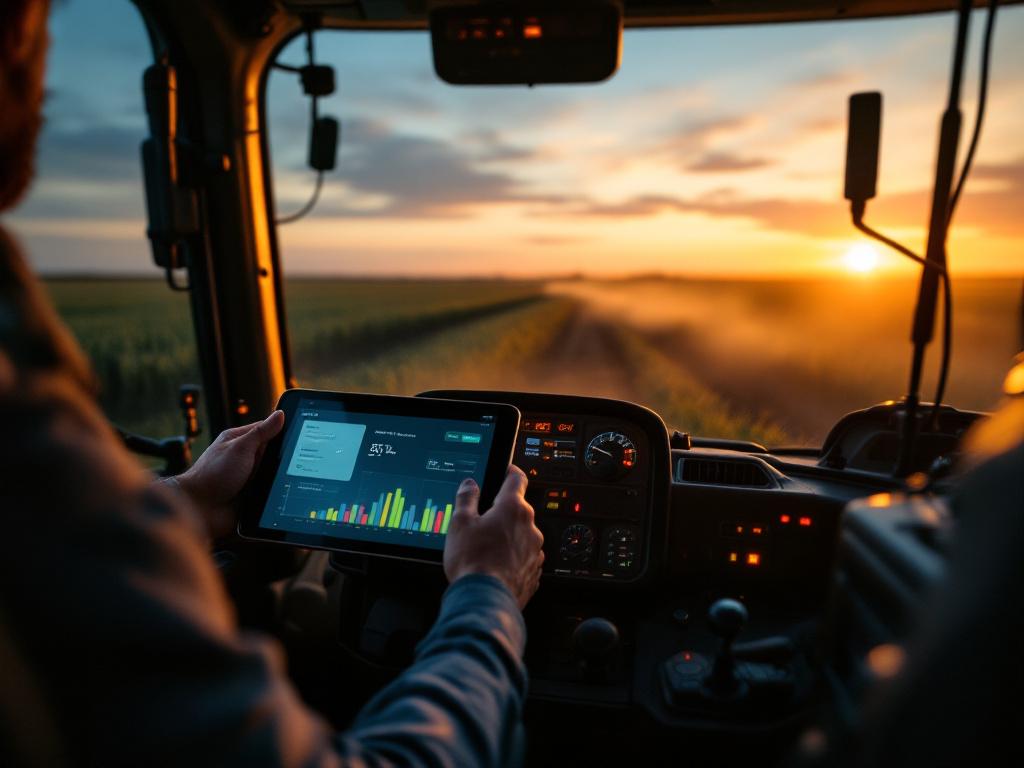
Table of Contents
- What Precision Planting 20/20 Actually Does at the Row Unit Level
- The 20/20 Hardware Stack — Component-by-Component Build
- From Soil Map to Seed in Ground — The Variable Rate Workflow
- Precision Planting 20/20 Against Trimble, John Deere ExactEmerge, and Raven
- Installation, Calibration, and First-Season Realistic Expectations
- Seven Adoption Mistakes That Quietly Erode 20/20 ROI
- Adoption Decision Matrix — Is Precision Planting 20/20 Right for Your Operation Right Now
What Precision Planting 20/20 Actually Does at the Row Unit Level
Precision Planting's 20/20 system is a planter-monitor and control platform that retrofits onto existing John Deere, Case IH, Kinze, and AGCO planters. It does not replace the planter — it instruments it. That distinction matters because the value proposition isn't "buy a new machine." It's "make the machine you already own honest about what it's actually doing in the ground." A precision planting 20/20 install converts a mechanical implement into a per-row data source, and from there into a per-row control system.
There are four mechanical problems 20/20 is built to solve, and understanding them frames every component decision later.
Seed singulation failure. Vacuum meters miss seeds or double-drop them, particularly as discs wear and seals degrade. A meter delivering 96% singulation looks fine on paper until you do the math: across 1,000 acres at 34,000 seeds per acre, that 4% gap is 1.36 million seeds either skipped or doubled. The 20/20's vSet meter paired with SeedSense monitoring reports singulation in real time, with a 99%+ target. When a row drops below threshold, the operator knows immediately — not at harvest.
Depth inconsistency. Terrain transitions, soil moisture pockets, and downforce variability mean a single pass can plant seeds anywhere from 1.0 inch to 2.5 inches deep. The DeltaForce hydraulic downforce system replaces conventional springs with hydraulic cylinders adjusting per row, every few feet, against live load-cell readings at the gauge wheel. According to University of Nebraska-Lincoln Extension, seed placement variation below 1.5 inches is the practical optimum for corn emergence uniformity — yet most conventional planters operate at 2 to 3 inches of variation. That delta is where stand uniformity goes to die.
Spacing and skip errors. These typically result from planting speed exceeding meter singulation capacity. The 20/20 flags them via Spacing Ratio Index (SRI), making operator speed discipline a data conversation instead of a guessing game.
Soil condition blindness. Operators plant on the calendar, not on the soil. SmartFirmer sensors read in-furrow moisture, organic matter, and temperature in real time. According to vendor trial data presented in Farm Journal video coverage, Precision Planting reports a roughly three bushel per acre yield advantage from SmartFirmer-equipped trials. Treat that as vendor-reported and validate against your own conditions, but the underlying logic — knowing when not to plant a zone — is operationally sound regardless of the exact bushel number.
The output side closes the loop. Every pass generates per-row logs: population, singulation, downforce, ride quality, furrow conditions. Those logs become the input for next year's prescriptions, which is only as good as the soil data feeding them — making GPS-driven soil sampling the foundation rather than an afterthought.
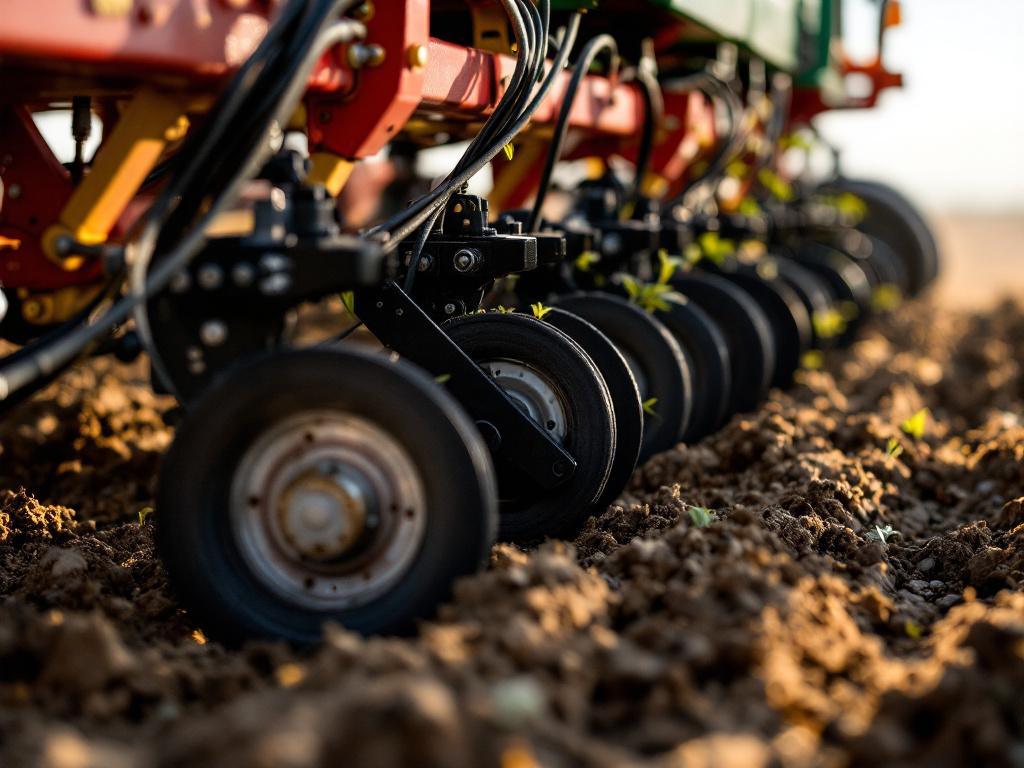
Precision planting 20/20 does not add complexity to the cab — it documents the variability that was already costing you yield, and gives you the data to do something about it next season.
The 20/20 Hardware Stack — Component-by-Component Build
A farmer rarely buys "20/20" as a single SKU. The system is modular, and the build path matters as much as the components themselves. Most operations stage the install over two or three seasons, starting with the highest-leverage piece for their specific planter condition. Below is the component stack with practical install context.
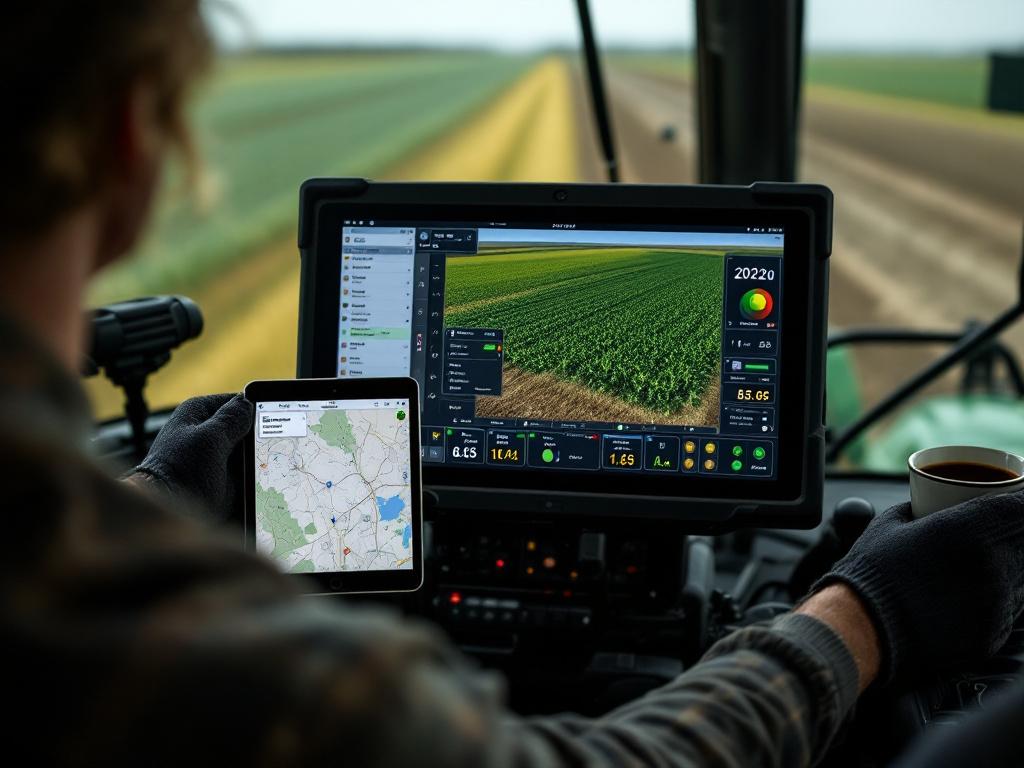
- 20/20 SeedSense Display. The in-cab monitor (or Gen 3 20/20 display) that aggregates per-row data and serves as the operator's main interface. Current offerings increasingly run through the FieldView Cab interface, and some operators stack a tablet alongside for prescription visualization. Install path: owner-installable in roughly half a day for the display itself; CAN bus integration with the planter typically needs a dealer touch.
- vSet and vDrive Electric Meters. vSet replaces vacuum-driven mechanical singulation with a precision disc design. vDrive adds an electric drive motor per row, enabling per-row population control and instant row shut-off — which kills double-planted overlap on point rows and headland turns. Install path: dealer-installed, typically a full day for a 16-row planter.
- DeltaForce Hydraulic Downforce. Replaces spring downforce on every row with a hydraulic cylinder that adjusts continuously against load-cell readings at the gauge wheel. This is the component that closes the depth-consistency gap referenced earlier. Install path: dealer-installed, hydraulic plumbing is non-trivial, plan 1-2 days for a fully-stacked planter.
- SmartFirmer. In-furrow optical sensor reading moisture, organic matter, and temperature row-by-row. The data feeds the display in real time and can trigger automatic adjustments to seeding depth or population if the system is configured for it. Install path: owner-installable on most planters, half day per planter for cabling and calibration.
- CleanSweep and FurrowForce. Closing system pressure control. CleanSweep manages residue clearance at the row unit; FurrowForce manages closing wheel pressure dynamically. Install path: dealer-installed for hydraulic components, owner-installable for sensor-only configurations.
- 20/20 Row Flow. Per-row liquid fertilizer rate control, allowing the planter to vary starter fertilizer rates by zone in parallel with seed population. Install path: dealer-installed, plumbing integration with the existing liquid system.
- GPS and RTK Position Input. The 20/20 ingests RTK position data from an external receiver via NMEA strings. The system does not care which receiver brand feeds it — only that the position is sub-inch accurate and the message format is compliant. An AgOpenGPS-compatible RTK setup feeding clean NMEA is functionally equivalent to a proprietary receiver for prescription playback. Install path: integrates wherever your guidance system already terminates.
On pricing: per-row costs scale linearly with planter size on most components, and an 8-row versus 24-row install differs by roughly 3x on hardware, plus install labor. The research did not supply current dealer pricing, and figures vary by region and configuration — get three written quotes before committing. According to AgFunder News, industry context for why per-row control matters comes from the documented inconsistency of traditional air seeders, where 100+ feet of delivery tubing creates delayed and patchy seed and fertilizer placement — Clean Seed is a competing vendor making this case to sell its own alternative.
From Soil Map to Seed in Ground — The Variable Rate Workflow
Variable rate seeding is a four-phase workflow. Skipping any phase undermines the others. The hardware is necessary but not sufficient — without a disciplined process, you've bought expensive sensors that document the same poor outcomes year after year.
Phase 1 — Pre-Plant Prescription Build (Winter)
This is where the precision actually originates. The farmer or agronomist gathers inputs: multi-year yield maps, grid or zone soil sample results, EC mapping if available, topography and drainage data. Software platforms — Climate FieldView, SMS, Trimble Ag, or third-party tools like Granular — generate a variable-rate seeding script as a shapefile assigning target populations to management zones. Typical corn populations range from 28,000 to 38,000 seeds per acre, with productive zones getting higher populations and stress-prone zones (sandy knobs, compacted headlands, late-drying clay) getting lower.
The quality of this script is downstream of soil data quality. Iowa State University Extension emphasizes that recalibration is required per seed lot because thousand-kernel weight varies between lots even within the same hybrid. The prescription is only honest if the meter calibration matches the seed actually in the box. This is also where improving soil health with GPS-driven soil sampling feeds directly into variable rate seeding effectiveness — old soil data produces old prescriptions.
Phase 2 — Script Load and Field Setup
The script transfers to the 20/20 display via USB, cloud sync, or in some workflows through a tablet bridge. The farmer enters seed lot data: thousand-kernel weight, germination percentage, treatment. The system uses these inputs to adjust meter rotation speed per population target. This step takes 10-15 minutes per field-and-lot combination, and shortcutting it propagates error through every subsequent acre.
Phase 3 — In-Field Execution
The 20/20 reads GPS position, looks up the prescribed population for that coordinate, and commands the vDrive electric meter to spin at the rate required to deliver that population at the current ground speed. SmartFirmer reads furrow conditions in real time — if organic matter or moisture in a zone falls outside threshold, the display alerts the operator. Every row's singulation, skips, doubles, ride quality, and downforce are logged second-by-second. If a row blockage occurs, the alert fires within seconds, not at the end of the row.
This is where retrofit precision planting earns its keep. The same field, the same operator, the same seed — but the machine is now varying populations by zone and documenting the variability that previously hid in averages.
Phase 4 — Post-Plant Data Capture
Logs export as as-planted maps. These feed back into the management cycle, pairing with subsequent yield maps to validate which zones actually responded to which populations. This is the closed loop that justifies variable rate seeding as a multi-year investment rather than a single-season experiment.
A data-portability caveat: 20/20 logs natively export to Precision Planting's own cloud and to Climate FieldView. Getting them into a non-Bayer system requires shapefile export and manual import. Plan for this in your data workflow rather than discovering it mid-season.
The critical context check comes from USDA Economic Research Service: most variable rate seeding prescriptions in commercial use are built on outdated soil sampling, undermining the precision the hardware delivers. Re-sample on a 3-to-5-year cycle minimum. The planter executing a stale prescription with high fidelity is still executing a stale prescription.
Precision Planting 20/20 Against Trimble, John Deere ExactEmerge, and Raven
Farmers weighing precision planting 20/20 against the other major options care about five things: data ownership, per-row control granularity, retrofit versus OEM dependency, RTK input flexibility, and dealer density. The table below presents capabilities without scoring — the analysis afterward carries the judgment.
| Capability | Precision Planting 20/20 | John Deere ExactEmerge | Trimble Field-IQ | Raven OmniRow |
|---|---|---|---|---|
| Retrofit existing planter | Yes — major brands | OEM-only (new Deere) | Yes — major brands | Yes — major brands |
| Per-row population control | Yes (vDrive) | Yes (factory) | Yes (with add-on) | Yes (clutch-based) |
| Hydraulic per-row downforce | Yes (DeltaForce) | Yes (Active Downforce) | No native equivalent | Limited |
| In-furrow sensing | Yes (SmartFirmer) | No native equivalent | No native equivalent | No |
| Data export | Shapefile + FieldView | Operations Center | Trimble Ag Software | Slingshot cloud |
| RTK source flexibility | Any NMEA input | Tied to StarFire | Trimble preferred | Third-party accepted |
| Install requirement | High for hydraulics | OEM dealer only | Dealer or installer | Dealer typical |
The 20/20's edge is sensor density and retrofit flexibility — it instruments a planter you already own, regardless of color, and SmartFirmer is currently the only widely-available in-furrow conditions sensor at this maturity level. Where it costs you: the in-cab learning curve is steeper than turnkey OEM systems, and full-stack installs (DeltaForce + vDrive + SmartFirmer across every row) on smaller planters can approach the cost of a new planter outright.
ExactEmerge wins on integrated simplicity for operations already running Deere. One dealer, one support call, one data portal. The trade-off is ecosystem lock-in: data lives in Operations Center, and switching ecosystems later means rebuilding history from scratch.
Trimble and Raven occupy the middle. Both retrofit, both support per-row population, but neither matches 20/20's in-furrow sensing or DeltaForce-grade downforce. They tend to win on price-per-row for operations that don't need the full sensor suite.
For operations running AgOpenGPS-driven RTK guidance, the operationally important fact is that 20/20 accepts any NMEA-compliant RTK source. The iPad-based guidance layer feeds position to the planter brain without forcing a proprietary receiver purchase — the same prescription quality, none of the receiver tax. Prescription quality itself is downstream of remote sensing inputs, which is why leveraging satellite imagery for advanced farm management matters as much to a 20/20 user as to anyone running variable rate.
One honest note: most independent comparison data on yield outcomes between these systems does not exist in peer-reviewed form. Farmers should request multi-year, multi-field references from dealers rather than relying on single-season trial brochures.
The best precision planting system is the one your team will actually operate correctly. 20/20 demands more setup than a turnkey OEM stack, but it rewards operators who learn their field data.
Installation, Calibration, and First-Season Realistic Expectations
The first 90 days from purchase to confident operation follow a predictable arc. Skip steps and the system underperforms; honor them and precision planting 20/20 baseline production is reachable inside the first season.
- Pre-install planter audit. Inspect meter discs, chain wear, gauge wheel condition, hydraulic system. Worn mechanical parts will undermine sensor data quality — the sensors will faithfully document the iron's problems. Time: half day. Watch for: dealer pressure to skip this step and proceed straight to install.
- Hardware installation. Mount controllers, run sensor cabling, install hydraulic lines for DeltaForce, mount the in-cab display. Time: 1-2 days dealer install for a fully-stacked 16-24 row planter; 3-4 days DIY for owner-installable components only.
- Network and GPS integration. Wire the RTK position input — this is where an AgOpenGPS-derived NMEA stream plugs in cleanly — confirm CAN bus communication, verify the display reads every row. Time: half day if cables and protocols are documented.
- Static calibration. Run the meter calibration routine for each seed lot. Spin meters with the planter raised, count seeds dropped per revolution, validate against the lot's thousand-kernel weight. Time: 15-20 minutes per lot.
- Headland test pass. Plant 100-200 feet without seed first to verify mechanical motion, then with seed at low speed. Validate singulation reads, downforce reactivity, and SmartFirmer signal across every row. Watch for: row units with abnormally low singulation here reveal mechanical issues before they cost you yield.
- First production field at reduced speed. Plant a known, uniform field at 4-5 mph rather than 8-10 mph. This baselines what "good" looks like in your conditions before you push speed. Speed escalation comes after the data confirms the system is performing.
- Mid-season data review. Pull as-planted maps after the first 200-500 acres. Compare commanded population against actual. Investigate any row consistently outside 97% singulation — it's almost always a mechanical issue (worn disc, vacuum leak, seed tube wear) rather than a sensor calibration problem.
- End-of-season debrief with dealer. Walk through the season's logs with the dealer agronomist. This is where prescription refinement for year two begins, and it's the conversation most farmers skip because harvest pressure crowds it out. Calendar it before planting ends.
First-season learning tax. Expect roughly 5-10% of the season's acres to be sub-optimal as the team learns the system. This is normal and budgeted-for in any honest ROI calculation.
Dealer dependency curve. High the first year, moderate the second, low by year three for everything except hydraulic service. Plan training time for the operator who will own the system day-to-day.
ROI timeline. Independent ROI data on precision planting is variable and often vendor-influenced. According to Farm Progress, payback ranges from 2 to 4 seasons depending on baseline planter condition and seed cost — operations with worn planters and high seed bills see faster returns; operations with new iron and uniform fields see slower ones. Build your projection on conservative assumptions and validate with your own data after season one.
Seven Adoption Mistakes That Quietly Erode 20/20 ROI
The hardware is the easy part. The mistakes that quietly bleed return on investment are operational and behavioral. Each of the following is a documented pattern across the precision planting user base.
- Treating SmartFirmer alerts as noise. Operators fatigued by alerts mute them. When you mute moisture-below-threshold alerts, you lose the system's main differentiator — knowing when not to plant a zone. Discipline the alert thresholds during calibration so they fire only when action is actually warranted. An alert that fires every 200 feet trains the operator to ignore the one alert that mattered.
- Running last year's prescription on this year's soil. Soil organic matter, drainage, and compaction shift season-to-season under tillage, weather, and rotation pressure. USDA Economic Research Service data documents that most commercial variable rate scripts run on soil samples three or more years old, eroding the precision the equipment is delivering. Re-sample on a defined cycle and document the date on every script file.
- Not recalibrating for each seed lot. Thousand-kernel weight varies across lots even within the same hybrid. Iowa State University Extension covers this directly — skipping recalibration means commanded population diverges from actual population by 2-5%. On 1,000 acres at 34,000 seeds per acre, a 3% calibration miss is over a million seeds in the wrong place.
- Pushing planting speed past meter capability. vDrive meters maintain singulation up to roughly 10 mph in good conditions. Aggressive operators push 12+ mph and watch Spacing Ratio Index degrade in real time on the display, then dismiss the data. The yield cost of poor spacing exceeds the time saved every time the math gets run honestly.
- Treating downforce as set-and-forget. DeltaForce reacts to ground load in real time, but the target load setting requires soil-condition input from the operator. Setting it once in April and ignoring it through changing soil moisture means the system is correcting against the wrong setpoint. Mid-season target adjustments take five minutes and recover real yield.
- Letting data logs pile up unlabeled. As-planted shapefiles named "Field1_2024.shp" without zone, hybrid, or population context are useless three years later when you're investigating a yield anomaly. Standardize file naming on day one — field name, year, hybrid, prescription version. The discipline costs nothing and pays off the first time you need to audit a decision.
- Assuming the 20/20 talks to everything else automatically. It does not. Bridging 20/20 logs into non-FieldView farm management software requires manual shapefile export. Plan a 30-minute monthly data-housekeeping window during planting season — if it's not on the calendar, it doesn't happen, and at the end of the season you have a year of logs in a format that doesn't connect to anything else you use.
Adoption Decision Matrix — Is Precision Planting 20/20 Right for Your Operation Right Now
Not every operation should buy precision planting 20/20 this year, and that's not a marketing problem — it's a fit problem. The matrix below maps operation profile against system fit honestly.
| Operation Profile | Field Variability | Existing Precision Ag | 20/20 Fit |
|---|---|---|---|
| 200-500 ac, uniform soil, first tool | Low | None | Premature — start with monitor-only |
| 500-1,500 ac, RTK in use | Medium | RTK autosteer | Strong fit — vDrive + SmartFirmer |
| 1,500-3,500 ac, full data workflow | High | RTK + yield mapping | Essential — full stack |
| 3,500+ ac, multi-planter fleet | High | RTK + telemetry | Essential — staged rollout |
| Custom planting, multi-client | Variable | RTK guidance | Strong fit — portability sells |
| Small operation, aging planter | Any | None or basic | Wrong tool — rebuild iron first |
The matrix is honest about where 20/20 is the wrong purchase. A worn planter with bent row units and chain slop will not produce clean data no matter how many sensors you bolt onto it — fix the iron first, then instrument it. Similarly, a small uniform operation will see the components' cost vastly exceed the seed savings, regardless of how attractive the technology brochure looks at the farm show. Operations farming highly variable terrain — where terrace farming and sustainable agriculture practices already require zone-level management thinking — see precision planting compound returns faster because the variability is already documented in the management workflow.
Where 20/20 earns its keep: operations with measurable in-field variability, RTK guidance already in use, and someone — owner, agronomist, or full-time operator — willing to spend time with the data. The system is a diagnostic and execution platform, not an autopilot.
For operations already running RTK autosteer through Agro Navigator's iOS-native platform, the integration story is direct. The 20/20 ingests any NMEA-compliant RTK position, the iPad-based guidance handles the steering layer, and a 4G-equipped configuration adds the remote telemetry that makes multi-planter operations visible from one dashboard. No Windows PC required, no proprietary receiver tax, no vendor lock-in on the guidance side of the equation.
Bring to your dealer demo:
- Three years of yield maps for one representative field — printed and digital.
- Current seed cost per acre and your actual measured seeding rate, not the rate you think you're running.
- Three field-specific questions: where are you losing precision right now, what's the realistic payback timeline for your acreage, and can you start with one planter and scale across the fleet.
A dealer who answers those three questions with specifics rather than brochure language is the dealer worth working with. A dealer who answers with averages and testimonials is selling — not consulting. The difference shows up in season three, when the system is either earning its keep or sitting in the cab as expensive evidence of a decision made too fast.